Explosion-proof industrial solutions
We specialize in the design, manufacture and certification of equipment and protective systems for use in potentially explosive environments according to the ATEX directive.

We specialize in the design, manufacture and certification of equipment and protective systems for use in potentially explosive environments according to the ATEX directive.
The professionals at ATEXLAB LTD. carry out their work in potentially explosive atmospheres with the appropriate knowledge and experience, in order to protect the environment and production against potential explosion hazards. Our engineers and technicians hold ATEX certification. Our team performs engineering, service, and maintenance work with determination, high attention to detail, and precision, in accordance with the regulations for explosive atmospheres.

The directive defines the obligations of manufacturers and the Essential Health and Safety Requirements (EHSR).

A mixture of gases, vapours, mists, or dusts with air, which may ignite under certain operating conditions.

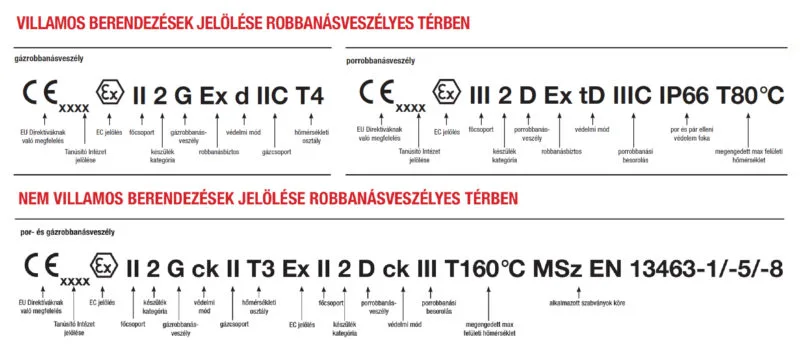
CE and ATEX marking is mandatory in all EU countries for products used in potentially explosive atmospheres.
ExNB is the European professional group of Notified Bodies for explosion safety technology within the ATEX system. These independent institutions perform the mandatory testing and certification of equipment intended for use in explosive atmospheres, and they issue position papers (ExNB Sheets) to assist manufacturers and inspectors in uniform application.
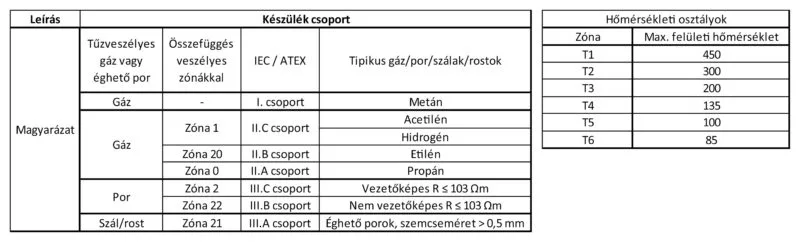
Hazardous areas are defined by zones based on the likelihood of an explosive atmosphere occurring.
Explosive atmosphere present continuously, for long periods, or frequently.
Explosive atmosphere likely to occur occasionally in normal operation.
Explosive atmosphere not likely to occur, or only for a short period.
Explosive dust cloud present continuously, for long periods, or frequently.
Explosive dust cloud likely to occur occasionally in normal operation.
Explosive dust cloud not likely to occur, or only for a short period.
We offer complex ATEX solutions from design to certification.
Design, Sizing, Optimization

Machine manufacturing, Installation

Maintenance, Service

Consulting, Authority inspection

ATEX IECEx compliance, Explosion protection documentation, Zone classification, Ignition source analysis, Standard compliance reviews, Manufacturer documentation, Electrical and non-electrical explosion safety technology, Training, consulting, HAZOP, SEVESO, SKET
Our ATEX experts guarantee full compliance with explosion safety regulations. With up-to-date knowledge and practical experience, we support you from design to certification, ensuring smooth market access and safe operation.

ATEX and Chemical Mechanical Engineering Expert, President of AtexLab Ltd.
ATEX, IECEx Expert, Auditor, Stahl Hungary, Veproil
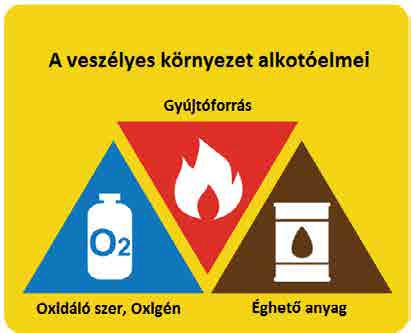
An explosion is a sudden chemical reaction between a combustible substance and oxygen, accompanied by the release of a large amount of energy. Combustible substances can be gases, vapours of liquids, solid or liquid-based mists, or dusts. An explosion can occur if the 3 factors are present simultaneously in the given medium. (See figure) For safety reasons, the characteristics of various hazardous substances must be taken into account. The flash point is the lowest temperature at which the gases or vapours of a combustible substance mixed with oxygen form an explosive mixture at normal atmospheric pressure. If the flash point of the hazardous substance is generally higher than the surrounding temperature, an explosive atmosphere cannot form. In order for an explosive atmosphere to develop, the combustible/hazardous substance must be present in the appropriate concentration.